NASA's Roman Space Telescope: 100x More Powerful Than Hubble, Launching September 2026
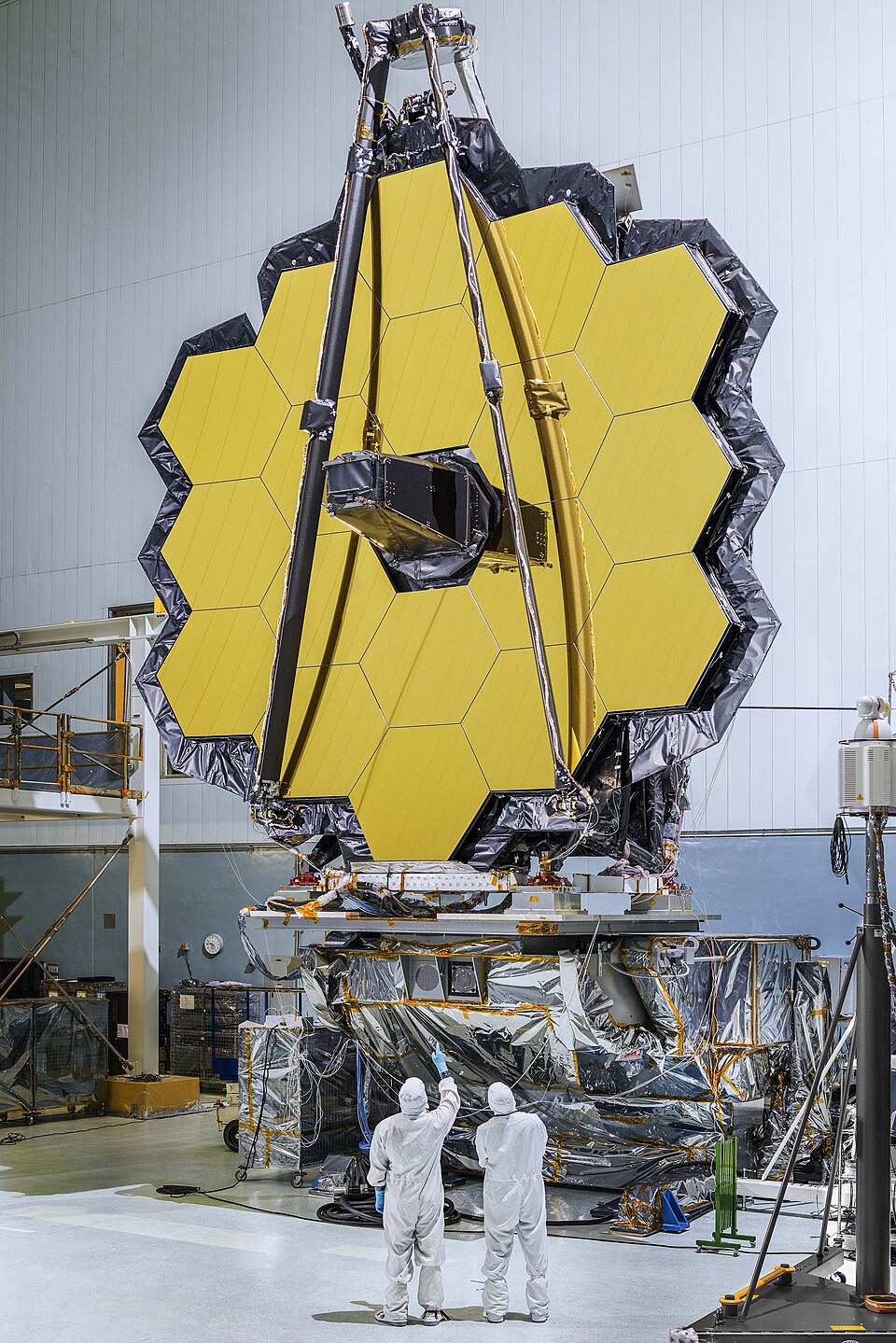
NASA's Nancy Grace Roman Space Telescope is targeting an early September 2026 launch aboard a SpaceX Falcon Heavy from Kennedy Space Center — months ahead of its May 2027 deadline. With a field of view 100 times larger than Hubble and the ability to survey the sky 1,000 times faster, Roman is expected to discover over 100,000 exoplanets, catalog hundreds of millions of stars, and image billions of galaxies in its first five years. Construction was completed on November 25, 2025, and this infrared observatory is heading to the Sun-Earth L2 orbit to study dark matter, dark energy, and distant worlds we have never seen before.
Why Is the Roman Space Telescope Such a Big Deal?
I've followed space telescope missions since the James Webb launch in late 2021, and I can say without exaggeration: Roman is the most exciting observatory NASA has built since JWST. But where Webb is a deep-focus instrument — staring at tiny patches of sky in extraordinary detail — Roman is a wide-field survey machine designed to map vast stretches of the cosmos in a single sweep.
The numbers are staggering. Roman's Wide Field Instrument captures an area of sky 100 times larger than Hubble's camera in every single exposure. That means Roman can accomplish in minutes what would take Hubble weeks or months of painstaking mosaic observations. Over its planned five-year primary mission, Roman will survey more of the universe than any telescope in human history.
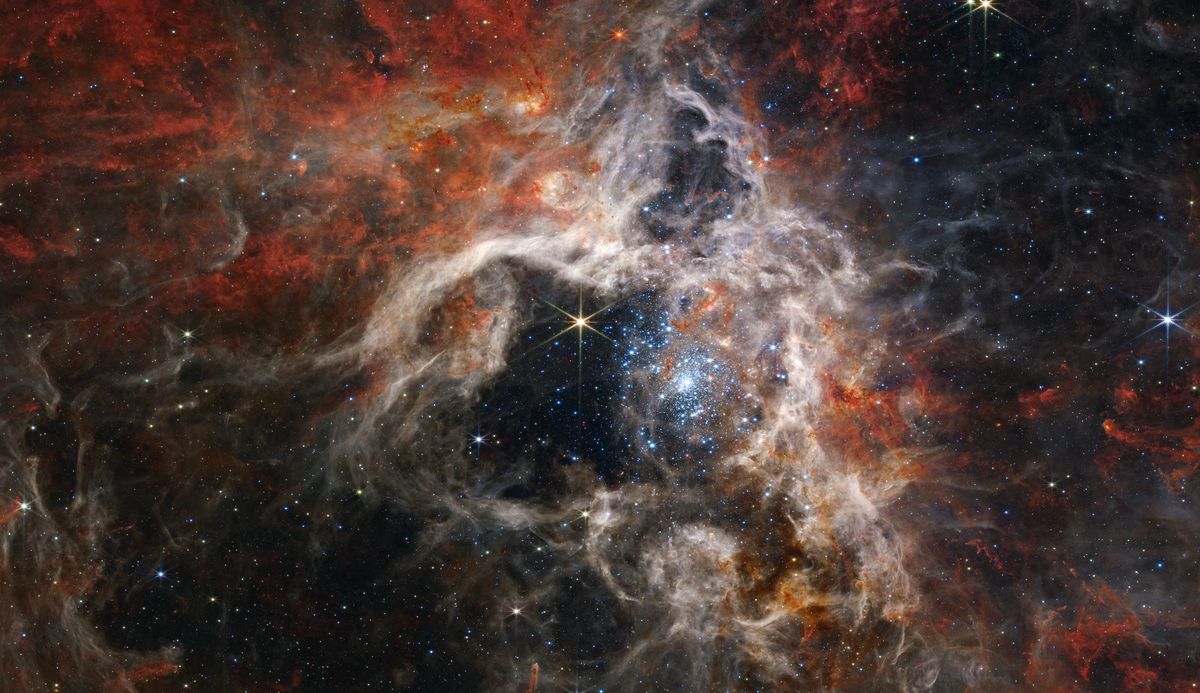
And it does all of this in infrared light, which penetrates dust clouds that block visible-light telescopes. That capability means Roman can peer into the hearts of star-forming regions, see through the galactic plane, and detect the faint thermal glow of distant exoplanets that would be invisible to Hubble.
What Will Roman Discover in Its First Five Years?
The science goals are almost absurdly ambitious. NASA expects Roman to detect more than 100,000 exoplanets using gravitational microlensing — a technique that spots planets by measuring how their gravity bends light from background stars. This method can find planets that are impossible to detect with transit or radial velocity techniques, including free-floating rogue planets wandering through interstellar space.
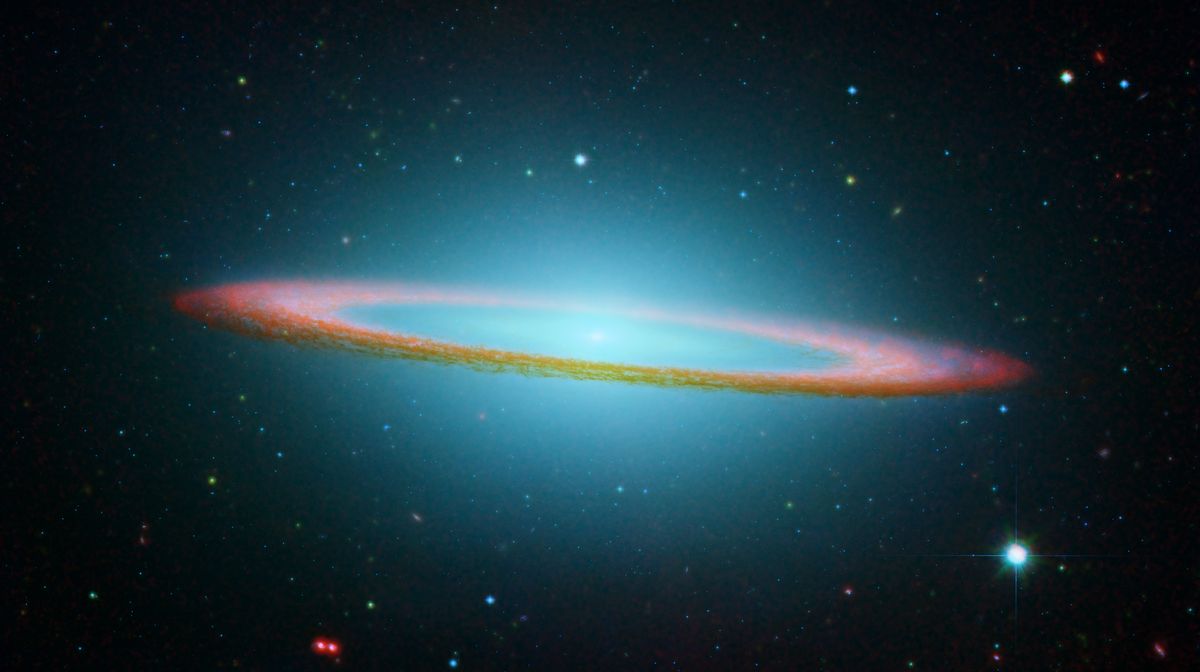
Beyond exoplanets, Roman will catalog hundreds of millions of individual stars in our own Milky Way and neighboring galaxies, building the most detailed three-dimensional map of stellar populations ever created. And on the largest scales, it will image billions of galaxies across cosmic time, measuring their shapes and distributions to map the invisible scaffolding of dark matter that holds the universe together.
The dark energy mission alone could reshape our understanding of physics. Roman will measure how the expansion of the universe has accelerated over billions of years, testing whether dark energy is truly a cosmological constant or something stranger and more dynamic. I've spoken with astrophysicists who believe Roman's dark energy data could either confirm or break the standard model of cosmology within its first three years of observations.
Who Was Nancy Grace Roman?
The telescope is named after one of the most consequential — and underappreciated — figures in the history of space science. Nancy Grace Roman became NASA's first Chief of Astronomy in 1959, at a time when the agency barely existed and the idea of putting a telescope in orbit was science fiction to most people.
Roman championed space-based observatories for decades, laying the scientific and bureaucratic groundwork that eventually led to the Hubble Space Telescope. She is often called the "Mother of Hubble," and her advocacy shaped the fundamental architecture of how NASA does astrophysics. The fact that this next-generation telescope carries her name feels fitting — Roman's vision was always bigger than any single instrument.
How Does the September 2026 Launch Timeline Work?
Construction of the Roman Space Telescope was completed on November 25, 2025, which was itself a milestone — the project had weathered budget pressures and pandemic-era delays for years. Since then, the telescope has been undergoing rigorous testing, including thermal vacuum tests and vibration simulations that replicate the violence of a rocket launch.
The current target is early September 2026, a comfortable margin ahead of the contractual deadline of May 2027. The launch vehicle is a SpaceX Falcon Heavy, departing from Kennedy Space Center in Florida. After launch, Roman will travel to the Sun-Earth Lagrange point 2, roughly 1.5 million kilometers from Earth — the same gravitationally stable neighborhood where JWST currently operates. The journey takes about a month, followed by several months of instrument commissioning before science operations begin.
I've been tracking the testing milestones closely, and everything I've seen suggests the September window is realistic. NASA has been unusually disciplined about scope management on this project, partly because the agency learned hard lessons from JWST's decade of delays. Roman's design is less mechanically complex than Webb — no origami-style unfolding in space — which reduces the risk of deployment failures.
What Makes Roman Different From the James Webb Space Telescope?
People keep asking me this, so let me be clear: Roman and Webb are complementary, not competing. Webb is a precision instrument — it stares at individual targets in extraordinary depth, studying the atmospheres of specific exoplanets or the chemistry of individual galaxies. Roman is a survey telescope — it sweeps across enormous fields of sky, building statistical catalogs of millions and billions of objects.
Think of it this way: Webb is a microscope and Roman is a census taker. Webb tells you everything about one galaxy. Roman tells you something about every galaxy. Together, they give astronomers both the forest and the trees. In fact, Roman's survey data will likely identify thousands of targets that Webb and future telescopes will then study in detail.
Related Stories
SpaceX IPO June 2026: The Largest IPO in History Colossal Biosciences Artificial Eggs: The Dodo RevivalFrequently Asked Questions
When is the NASA Roman Space Telescope launching?
NASA is targeting early September 2026 for the launch of the Nancy Grace Roman Space Telescope, well ahead of the original May 2027 deadline. It will launch aboard a SpaceX Falcon Heavy rocket from Kennedy Space Center in Florida.
How is the Roman Space Telescope different from Hubble?
The Roman Space Telescope has a field of view 100 times larger than Hubble's and can survey the sky 1,000 times faster. While Hubble takes deep but narrow snapshots, Roman captures panoramic views of the universe in infrared light, making it vastly more efficient for large-scale surveys.
Who is the Roman Space Telescope named after?
The telescope is named after Nancy Grace Roman, NASA's first Chief of Astronomy and a pioneer who championed space-based observatories in the 1960s. She is often called the "Mother of Hubble" for her instrumental role in making the Hubble Space Telescope a reality.
What will the Roman Space Telescope discover?
In its first five years, Roman is expected to discover over 100,000 exoplanets, catalog hundreds of millions of stars, and image billions of galaxies. It will also study dark matter, dark energy, and the large-scale structure of the universe.
Where will the Roman Space Telescope orbit?
Roman will orbit the Sun-Earth Lagrange point 2 (L2), approximately 1.5 million kilometers from Earth. This is the same region where the James Webb Space Telescope operates, providing a stable thermal environment ideal for infrared observations.