SpaceX IPO: The $1.75 Trillion Rocket Ship That Could Make Musk a Trillionaire
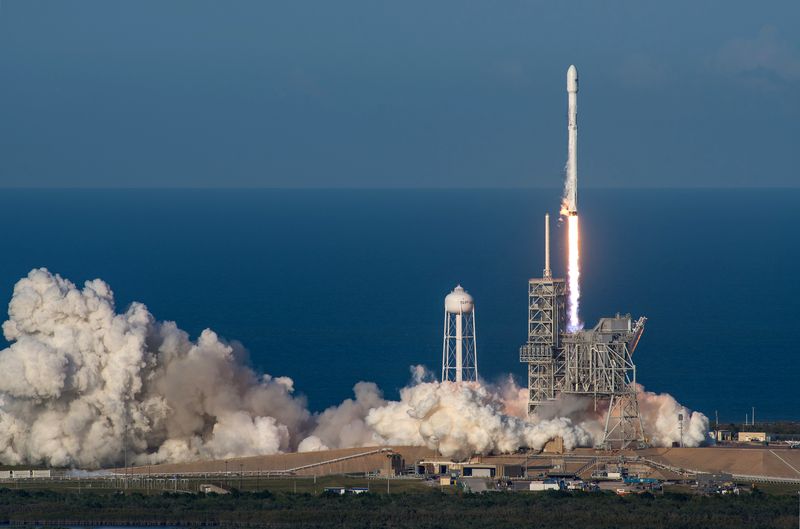
SpaceX IPO June 2026 is real and it is enormous. The company plans to list on Nasdaq on June 12 under the ticker SPCX at a staggering $1.75 trillion valuation, raising up to $75 billion. That shatters Saudi Aramco's $29 billion IPO record by more than three times. Internally codenamed "Project Apex," the offering is managed by 21+ investment banks and could push Elon Musk past the trillion-dollar personal net worth mark. The S-1 was filed mid-May, the roadshow kicks off June 4, and pricing is set for June 11. This is the biggest capital markets event of the decade.
Why Is SpaceX Going Public Now?
I've been watching SpaceX dodge IPO questions for years. Musk has said repeatedly that he didn't want the distraction of quarterly earnings calls while building rockets. So what changed? Two things, I think.
First, Starlink is now a cash machine. With $18.5 billion in 2025 revenue and a subscriber base that keeps climbing, SpaceX finally has the kind of predictable revenue stream that public market investors crave. The launch business alone was never going to justify going public — it's lumpy, contract-dependent, and hard for Wall Street analysts to model. Starlink changes that equation entirely.
Second, the private market liquidity is getting strained. SpaceX employees hold billions in paper wealth they can't easily access. Secondary market trades have been happening at increasingly wild valuations, and managing that chaos privately was becoming a headache. Going public solves the liquidity problem for thousands of employees and early investors who've been waiting over two decades for an exit.
How Absurd Is a $1.75 Trillion Valuation?
Let me put this number in perspective because I think people are glossing over how insane it is. At $1.75 trillion, SpaceX would be worth more than the entire GDP of South Korea. It would instantly become one of the ten most valuable companies on Earth — on day one, before a single public earnings report.
The valuation implies roughly 95x trailing revenue on $18.5 billion in 2025 sales. For comparison, Tesla trades at about 15x revenue. Amazon is around 3x. Even Nvidia at the peak of its AI frenzy topped out around 40x. SpaceX is asking investors to pay more than double Nvidia's peak multiple.
Is that justified? Here's my honest take: probably not at 95x. But markets don't price on what's rational — they price on narrative and scarcity. There is no other publicly tradable pure-play space company with SpaceX's track record, technology moat, and growth trajectory. Investors who missed Tesla, who missed Nvidia, are going to pile into this because it's the only ticket to Musk's space empire. Scarcity premium is real, even if the fundamentals don't fully support it yet.
What Does "Project Apex" Look Like Under the Hood?
The IPO's internal codename is "Project Apex," and the scale of the operation matches the ambition. Over 21 banks are involved in managing the offering — Goldman Sachs, Morgan Stanley, and JPMorgan leading the pack, with a small army of underwriters behind them. The roadshow starts June 4, giving institutional investors one week of presentations before pricing on June 11 and trading on June 12.
The dual-class share structure is the detail that matters most for governance. Class B shares, held by Musk, carry 10 votes per share. Class A shares sold to the public get one vote each. This means Musk retains overwhelming voting control regardless of how much equity he sells. Love it or hate it, this is the Zuckerberg-Meta playbook: take public money while keeping absolute power.
I personally find this structure frustrating as an investor, but I also understand why Musk insists on it. SpaceX's entire strategy — the willingness to blow up rockets until they work, the multi-decade Mars timeline, the vertically integrated manufacturing — requires a founder who can ignore short-term pressure. Public shareholders screaming about quarterly margins would kill SpaceX's culture. The dual-class structure is the price of admission.
Could This Really Make Musk a Trillionaire?
At a $1.75 trillion valuation, Musk's estimated 42% economic stake in SpaceX would be worth roughly $735 billion. Add his Tesla holdings, his xAI stake, and other assets, and yes — the math gets him past $1 trillion in total net worth. He'd be the first person in history to cross that line.
I find myself weirdly conflicted about this. On one hand, the concentration of that much wealth in one person raises legitimate questions about economic power and societal influence. On the other hand, Musk actually built something extraordinary with SpaceX. This isn't inherited wealth or financial engineering — it's a company that fundamentally changed how humanity accesses space. The reusable rocket technology alone saved NASA and commercial satellite operators billions. If anyone's going to be worth a trillion dollars, at least this one built actual rockets.
Is This the Start of a Mega-IPO Wave?
SpaceX might be the first domino in what could become the biggest IPO year since 2021. OpenAI is reportedly planning its own public offering later in 2026, and Anthropic is rumored to be exploring options as well. If SpaceX's IPO is well-received, it could blow the window wide open for AI and deep tech companies that have been staying private.
I've been telling friends for months: 2026 is the year the dam breaks. These companies raised at enormous private valuations during the zero-interest-rate era, and now their investors want exits. SpaceX going first is smart — it's the most iconic name with the clearest business model. If SPCX trades well in its first weeks, expect the IPO pipeline to accelerate dramatically.
Related Stories
Colossal Biosciences Uses Artificial Eggs to Bring Back the Dodo Google Googlebook: The AI-Powered Laptop Running AndroidFrequently Asked Questions
When is the SpaceX IPO date?
SpaceX is targeting June 12, 2026 for its Nasdaq listing under the ticker symbol SPCX. The roadshow begins June 4, with pricing expected on June 11, the night before trading opens.
What is SpaceX's IPO valuation?
SpaceX is targeting a $1.75 trillion valuation, making it the largest IPO in history. The company aims to raise up to $75 billion, shattering Saudi Aramco's previous record of $29 billion by more than three times.
What ticker symbol will SpaceX trade under?
SpaceX will trade on the Nasdaq exchange under the ticker symbol SPCX.
Will Elon Musk still control SpaceX after the IPO?
Yes. SpaceX is using a dual-class share structure that gives Musk supervoting rights, ensuring he retains majority voting control of the company even after going public.
Is SpaceX profitable?
SpaceX reported approximately $18.5 billion in revenue for 2025. The S-1 filing reveals the company is profitable, driven by Starlink subscriber growth and government launch contracts, though the $1.75 trillion valuation prices it at roughly 95x trailing revenue.