Sagrada Família 2026: Pope Blesses World's Tallest Church — What This Moment Means
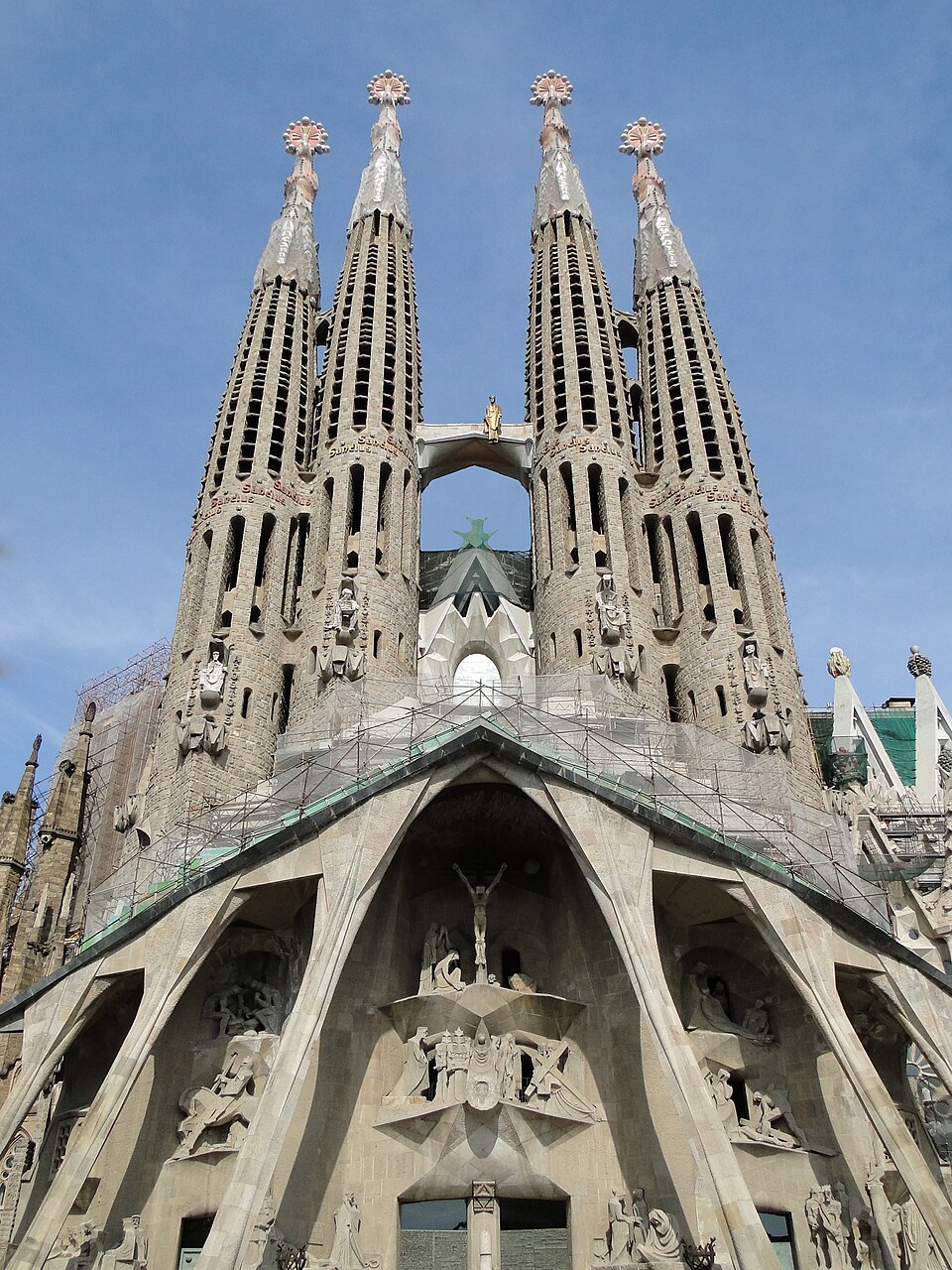
In June 2026, Pope Leo XIV blessed the completed Tower of Jesus Christ at the Sagrada Família in Barcelona — the central spire that crowns Antoni Gaudí's 144-year masterwork and makes it the tallest church in the world. Construction began in 1882. The building outlasted the architect who defined it (Gaudí died in 1926), survived a civil war, and endured a pandemic that halted progress yet again. What exists in Barcelona today is not just a finished building — it is proof that some human ambitions are worth taking a century and a half to realize.
144 Years in the Making: Why This Moment Is Unlike Any Other
I've been to Barcelona twice. The first time I stood inside the Sagrada Família, I cried — which surprised me, because I was 24, traveling alone, and thought I was past the age of being undone by a building. I wasn't. The interior does something to you that photographs don't prepare you for: the columns branch upward like a forest canopy, the stained glass throws colors you don't have names for across the stone floor, and the entire structure vibrates with the feeling that someone poured their whole life — and then several other lives — into this one question of what a sacred space could be.
That was before completion. What visitors experience now — the full 172.5-metre Tower of Jesus Christ rising above everything else in Barcelona's skyline — is something fundamentally different. The building Gaudí imagined but knew he would never see finished is finished. That is not a small thing.
Pope Leo XIV's blessing in June 2026 marked the official completion of what architectural historians have called the most ambitious building project of the modern era. The Sagrada Família is now, unambiguously, the tallest church in the world — surpassing Ulm Minster in Germany, which held that distinction for over a century.
What Gaudí Built — And Why No One Has Built Anything Like It Since
Antoni Gaudí took over the Sagrada Família project in 1883, one year after construction began under Francisco de Paula del Villar. What he inherited was a conventional neo-Gothic crypt. What he spent the next 43 years of his life transforming it into was something architecture had no category for — and still doesn't, really.
Gaudí worked from nature. He studied the load-bearing structures of bones, trees, and shells — and concluded that the straight line was an invention of human laziness, not an architectural necessity. The Sagrada Família has no straight lines. Its columns are hyperboloids. Its towers are paraboloids. Its facades are geological — crawling with symbolic sculptures of the Nativity and the Passion that read differently depending on whether you're standing close enough to touch them or far enough away to see the whole composition.
The building is simultaneously Gothic and Art Nouveau and something with no name that came after both. It compresses references to medieval Spanish cathedral architecture, the organic geometry of the natural world, and Gaudí's own devoutly Catholic symbolism into a structure that has influenced architects for a century without ever being successfully imitated. The reason no one has built anything like it since is not a failure of ambition — it's that Gaudí himself spent 43 years developing the visual language, and died before writing it down in any form that could be transferred. He was the language.
Gaudí died in 1926 — struck by a tram in Barcelona, three days before he could have been saved — when the Sagrada Família was less than a quarter complete. He knew this would happen. He designed the building to be continued by others, leaving models and drawings that were partially destroyed in a fire during the Spanish Civil War. The architects who continued his work after 1936 were, in a meaningful sense, archaeologists as much as builders — reconstructing his intentions from fragments.
The Tower of Jesus Christ: What the Completion Actually Means
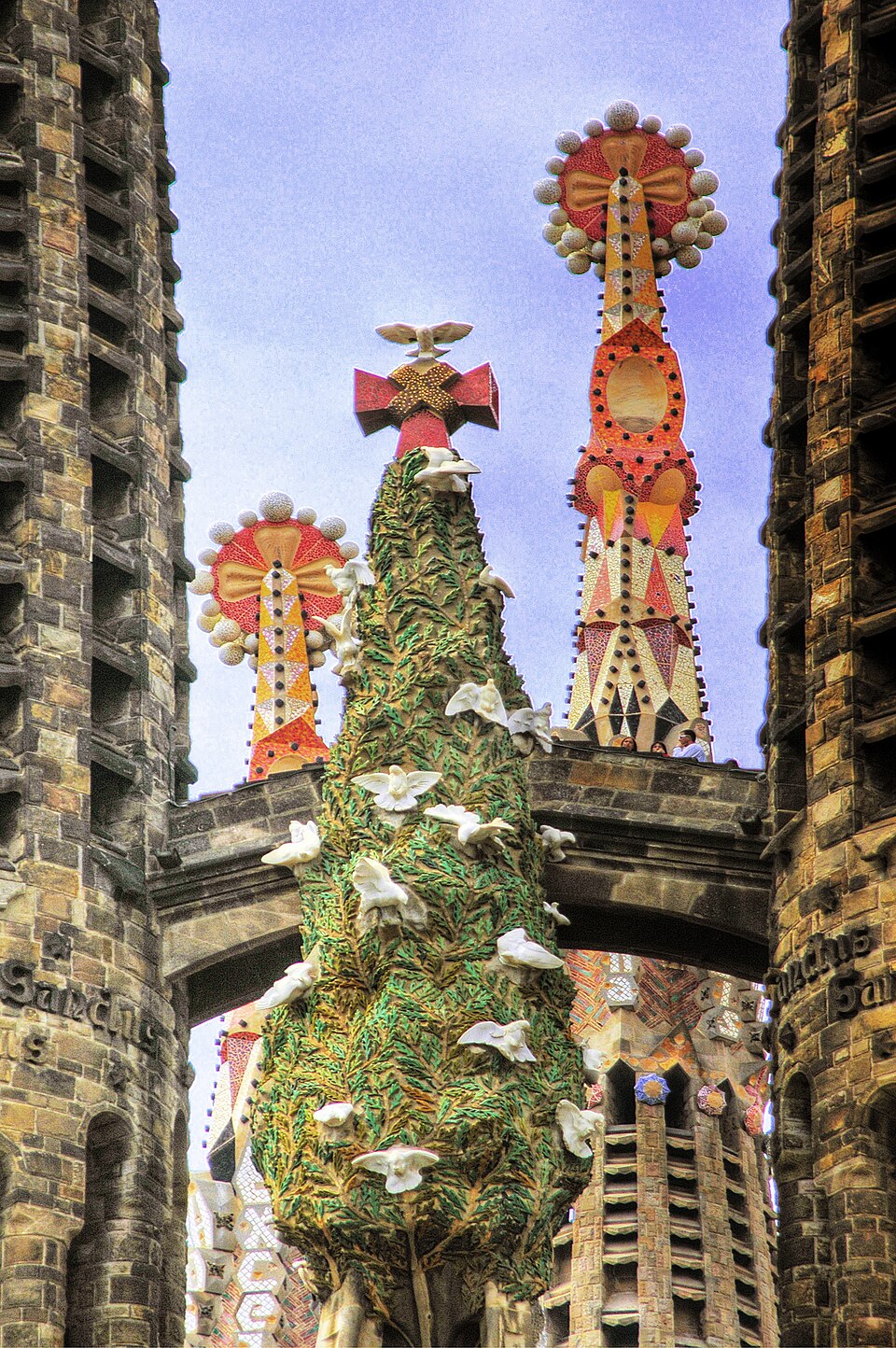
The original design called for 18 towers, each representing a different figure from the New Testament — the twelve Apostles, the four Evangelists, the Virgin Mary, and at the centre, Jesus Christ. The Tower of Jesus Christ was always intended to be the tallest: the symbolic culmination of the entire composition, the point around which everything else organizes itself.
Its completion in 2026 does not mean every detail of the building is finished. The Sagrada Família has always been an evolving project, and there remain interior elements, facade sculptures, and decorative programmes that will continue to be refined. But the structural statement — the thing Gaudí designed, the statement he wanted the Barcelona skyline to make — is now made. The silhouette is complete.
Pope Leo XIV's blessing was not merely ceremonial. The Sagrada Família is a consecrated basilica — it has been a functioning church since Pope Benedict XVI consecrated it in 2010, in another historic milestone. The 2026 papal blessing of the completed central tower represents the closure of an architectural chapter that has lasted longer than most nations have existed in their current form.
For Barcelona, the cultural impact extends well beyond religion or architecture. The city already receives more than 30 million tourists annually, and the Sagrada Família — even as an incomplete building — drew approximately 4.5 million visitors each year, making it consistently one of the most visited paid monuments in the world. What the completion does is transform the experience from pilgrimage to a partially-finished monument into something else entirely: a visit to a building that exists as its creator intended it to exist. That is a different trip.
Why You Should Visit Now, Not Eventually
I understand the impulse to defer a trip to Barcelona. It's expensive. It's crowded. There's always something else competing for the budget. But I want to be direct: the Sagrada Família in its completed state is a once-in-a-generation travel experience, and the window to visit it as a new thing — before it becomes simply a fixture of the skyline rather than a fresh revelation — is right now.
There is a quality to being in the presence of something that has just been finished after 144 years that will not last. In a decade, the completed Sagrada Família will be what it always was — magnificent, overwhelming, extraordinary. But it will be familiar in a way it cannot be right now, in 2026, when the entirety of the central tower is new to the world. The experience of standing in front of a building and knowing you are among the first generations to see it as its architect imagined it is not something you can replicate later.
Practically: book tickets in advance, and book them soon. The Sagrada Família was already sold out weeks in advance before the papal blessing. Post-completion demand is higher than any point in its history. The Torre Glòries and Park Güell are both within easy reach for a Gaudí-focused day, and Barcelona's food, beaches, and wider architectural heritage make it among the strongest city-trip destinations in Europe regardless of the basilica.
For anyone who cares about architecture, art history, the ambitions that human beings occasionally set for themselves, or simply places that stop you in your tracks — this is the moment. Gaudí waited his whole life to see this building. So did four generations of Barcelonans after him. The least we can do is show up.
More Culture & Entertainment
Frequently Asked Questions
Is Sagrada Família finally completed in 2026?
Yes. The Tower of Jesus Christ — the central and tallest of the 18 planned towers — was completed and blessed by Pope Leo XIV in June 2026, making the basilica structurally complete for the first time since construction began in 1882. This makes it the tallest church in the world.
How tall is the Sagrada Família's Tower of Jesus Christ?
The Tower of Jesus Christ stands at 172.5 metres (566 feet), making Sagrada Família the tallest church building in the world, surpassing Ulm Minster in Germany.
How long did it take to build Sagrada Família?
Construction began in 1882 under architect Francisco de Paula del Villar, before Antoni Gaudí took over in 1883. With the 2026 completion of the Tower of Jesus Christ, the total construction span is over 144 years — one of the longest construction projects in modern history.
Can you visit the completed Sagrada Família now?
Yes. Sagrada Família is open to visitors in Barcelona and already draws approximately 4.5 million tourists per year. With the 2026 completion, demand for tickets is at an all-time high — book well in advance online. Tickets often sell out weeks ahead.
Who was Antoni Gaudí and why does his architecture matter?
Antoni Gaudí (1852–1926) was a Catalan architect who developed a uniquely organic style drawing on natural forms — no straight lines, hyperbolic columns, symbolic facades. Sagrada Família is his masterwork: a building that blends Gothic structure with Art Nouveau symbolism in a way that has no direct precedent or successor in architectural history.