Toy Story 5: Everything You Need to Know About Pixar's Most Anticipated Sequel

Toy Story 5 opens in US theaters on June 19, 2026, with an LA premiere on June 9. Directed by Andrew Stanton (Finding Nemo, WALL-E), the film brings back Tom Hanks, Tim Allen, and Joan Cusack alongside new cast members Greta Lee, Conan O'Brien, and Bad Bunny. The plot follows 8-year-old Bonnie as she becomes obsessed with Lilypad, a frog-shaped tablet, forcing Woody, Buzz, and Jessie to confront an existential threat that no toy has faced before: being replaced not by other toys, but by technology itself. Box office projections point to a $150 million opening weekend and a potential $439 million domestic total, which would make it the biggest film of 2026.
The Premise That Makes This One Different
Every Toy Story sequel has raised the emotional stakes. Toy Story 2 asked what happens when a toy discovers it has value beyond its owner. Toy Story 3 confronted the reality that children grow up. Toy Story 4 explored whether a toy can choose its own purpose. Each film took what felt like a definitive ending and found new emotional territory worth exploring.
Toy Story 5 goes somewhere none of them dared. Bonnie is now 8 years old, and she's fallen in love with Lilypad -- a frog-like tablet device voiced by Greta Lee. This isn't another toy competing for attention. This is a screen. An algorithm. Something that learns what Bonnie wants and delivers it instantly, in ways that a pull-string cowboy or a space ranger action figure simply cannot match.
The toys-versus-technology angle isn't just a clever plot device. It's the anxiety that every parent, every kid, and frankly every adult recognizes in 2026. We've all watched a child choose a screen over a physical toy, over a book, over going outside. Pixar is taking that universal tension and filtering it through characters we've loved for three decades. That's the kind of storytelling instinct that turned a studio known for tech demos into the most emotionally intelligent animation house in history.
A Cast That Blends Legacy with Fresh Energy
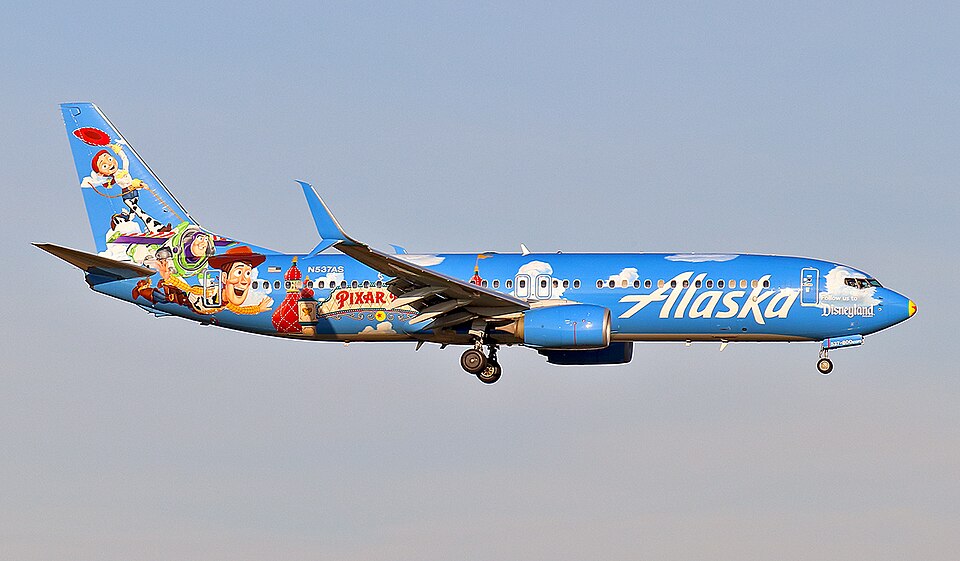
The returning voice cast reads like a hall of fame. Tom Hanks is back as Woody, Tim Allen returns as Buzz Lightyear, and Joan Cusack reprises Jessie. Tony Hale brings back Forky, Annie Potts returns as Bo Peep, and Keanu Reeves slides back into Duke Caboom's jumpsuit. These are voices that carry three decades of audience attachment, and hearing them together again will hit a specific emotional frequency that no new franchise can replicate.
The new additions are where things get interesting. Greta Lee as Lilypad is inspired casting -- her work in Past Lives demonstrated a quiet intensity and emotional precision that should make the tablet character far more than a simple villain. Conan O'Brien voicing a character called Smarty Pants is exactly the kind of self-aware comedy that Pixar does well. Craig Robinson, Bad Bunny, Ernie Hudson, and Alan Cumming round out a new ensemble that brings genuine range.
Andrew Stanton directing is the detail that matters most. The man who made Finding Nemo and WALL-E -- two of the most emotionally devastating animated films ever created -- is steering this ship. WALL-E is particularly relevant here: that film was fundamentally about the tension between technology and humanity, about whether screens and automation make us more connected or more isolated. Stanton has already told this story once, brilliantly, with robots. Now he's telling it with toys.
The London Premiere and the Road to June 19
The London red carpet event took place on May 28 at Odeon Luxe Leicester Square, giving international audiences and press the first look at the finished film. Early reactions from that screening have been carefully guarded under embargo, but the energy from attendees has been overwhelmingly positive -- the kind of restrained enthusiasm that suggests people saw something that genuinely moved them rather than merely entertained them.
The LA premiere is set for June 9, which will open the floodgates for US press reactions and social media buzz. The ten-day gap between the LA premiere and the wide release on June 19 is a confidence play by Disney. Studios that are nervous about their films push premieres as close to release as possible to minimize the window for negative word-of-mouth. A ten-day gap says: we want people talking about this movie. We want the anticipation to build.
The Complete Toy Story Franchise: Film by Film

| Film | Year | Director | US Box Office | RT Score |
|---|---|---|---|---|
| Toy Story | 1995 | John Lasseter | $191M | 100% |
| Toy Story 2 | 1999 | John Lasseter | $246M | 100% |
| Toy Story 3 | 2010 | Lee Unkrich | $415M | 98% |
| Toy Story 4 | 2019 | Josh Cooley | $434M | 97% |
| Toy Story 5 | 2026 | Andrew Stanton | $439M (proj.) | TBD |
The numbers tell a story of consistent escalation. Each sequel has outperformed its predecessor at the domestic box office, a feat almost no franchise in history can claim across five installments. The original Toy Story in 1995 was the first fully computer-generated feature film ever made -- a technological revolution that also happened to be a perfect movie. That it spawned a franchise where every single entry sits above 97% on Rotten Tomatoes is borderline absurd.
Toy Story 3's $415 million domestic haul in 2010 was the moment the franchise proved it could compete with the biggest live-action blockbusters. Toy Story 4 edged past it with $434 million in 2019, despite many fans questioning whether the story needed to continue after Toy Story 3's pitch-perfect ending. The $439 million projection for Toy Story 5 assumes a $150 million opening weekend, which would be the biggest animated opening of all time.
Why This Story Feels Personal
I watched the original Toy Story in a packed theater in 1995, and I remember the exact moment I realized what Pixar had done. It wasn't the animation -- though that was revolutionary. It was the scene where Woody watches Buzz fly for the first time and realizes his world has changed permanently. That mixture of jealousy, fear, and grudging wonder felt more emotionally honest than anything I'd seen in an animated film. I was hooked for life.
Thirty-one years later, I'm watching my own kids navigate the exact tension that Toy Story 5 is exploring. My daughter has a shelf full of toys she loved fiercely for years. They're still there. She doesn't touch them. The tablet won. And it's not that she made a conscious decision to abandon them -- it's that the tablet is designed to never let her attention wander long enough to remember what she's missing. That's the horror of it, and it's the kind of horror that Pixar understands better than any studio on earth: not the jump-scare kind, but the slow, quiet kind that happens when something beautiful gets replaced by something merely convenient.
If Toy Story 5 captures even a fraction of that feeling, it won't just be a good sequel. It'll be the most relevant Pixar film since Inside Out.
Box Office Outlook: Could This Be the Biggest Film of 2026?
The $150 million opening weekend projection isn't pulled from thin air. Toy Story 4 opened to $121 million in 2019, and franchise awareness has only grown through Disney+ streaming of the first four films. The nostalgia factor is enormous -- adults who grew up with the original are now bringing their own children, creating a two-generation audience that almost no other property can match.
The $439 million domestic projection would put Toy Story 5 in direct competition with every other 2026 release for the year's top spot. The summer 2026 corridor is packed with heavy hitters, from blockbuster sequels and franchise entries to ambitious original films like Spielberg's Disclosure Day. But animated films have a built-in advantage: they play well with families across the entire theatrical run, not just opening weekend, and Pixar's brand name still carries weight even after a few post-pandemic stumbles.
International projections push the total even higher. The Toy Story franchise has historically performed well in Europe, Latin America, and Asia-Pacific markets. A global total north of $1 billion is not just possible -- it's the baseline expectation.
More from Sixth Advice
Summer Movies 2026 Guide Masters of the Universe 2026 Preview Spielberg's Disclosure DayFrequently Asked Questions
When does Toy Story 5 come out in theaters?
Toy Story 5 opens in US theaters on June 19, 2026. The LA premiere is scheduled for June 9, and the London red carpet event took place on May 28 at Odeon Luxe Leicester Square.
Who is in the Toy Story 5 cast?
Returning cast includes Tom Hanks (Woody), Tim Allen (Buzz), Joan Cusack (Jessie), Tony Hale (Forky), Annie Potts (Bo Peep), and Keanu Reeves (Duke Caboom). New additions include Greta Lee as Lilypad, Conan O'Brien as Smarty Pants, Craig Robinson, Bad Bunny, Ernie Hudson, and Alan Cumming.
What is the plot of Toy Story 5?
Bonnie is now 8 years old and increasingly attached to Lilypad, a frog-like tablet device. Woody, Buzz, Jessie, and the gang face the existential threat of being replaced by technology rather than by other toys.
Who directed Toy Story 5?
Toy Story 5 is directed by Andrew Stanton, the filmmaker behind Finding Nemo and WALL-E. This is his first time directing a Toy Story film.
How much is Toy Story 5 expected to make at the box office?
Industry analysts project a $150 million US opening weekend. Domestic total projections sit around $439 million, which would make it potentially the biggest film of 2026.
Is Toy Story 5 the last Toy Story movie?
Pixar and Disney have not confirmed whether Toy Story 5 will be the final installment. The toys-versus-technology theme suggests a story that could serve as a definitive conclusion for the franchise.
Who voices the new character Lilypad?
Greta Lee voices Lilypad, a frog-shaped tablet device that becomes Bonnie's new obsession. Lee is known for her roles in Past Lives and Russian Doll.