Panini World Cup 2026 Sticker Craze: 980 Stickers, Record Demand, and Why Adults Can't Stop Collecting
The Panini World Cup 2026 sticker album is the largest ever made: 980 stickers across 48 nations, priced at $2 per pack (7 stickers each). Demand is running 3-5x higher than 2022, first-run stock sold out within a week, and roughly 40% of collectors are now adults chasing nostalgia. This is also Panini's second-to-last World Cup album before Fanatics takes over licensing in 2031.
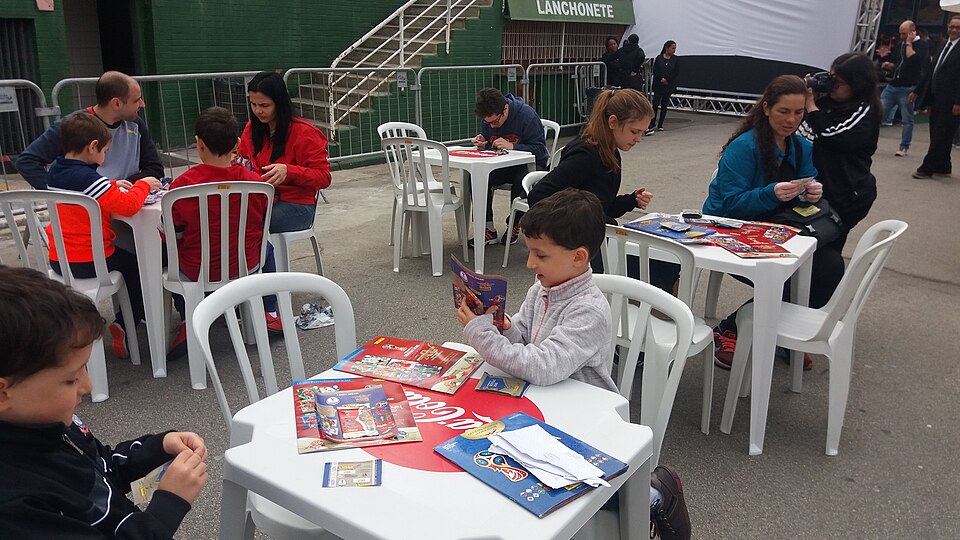
980 Stickers: The Biggest Album Panini Has Ever Produced
Let me put that number in perspective. The 2022 Qatar album had 670 stickers and people already complained about the cost of completing it. This time, Panini added 310 more stickers -- a 46% increase -- because FIFA expanded the World Cup to 48 teams. That means nations like Indonesia, Jamaica, and Saudi Arabia are getting their own dedicated sticker pages for the first time in World Cup history. For fans of those countries, seeing their players in a Panini album is genuinely emotional. I have seen the videos. Grown men crying over cardboard.
The expanded format also means the album itself is physically larger. More pages, more sections, more special inserts. Panini has introduced holographic "Legend" stickers for retired greats like Messi, Mbappé, and Ronaldo, which are insert-rate rarities that collectors are already reselling for $50-100 each. The secondary market is moving faster than the primary one.
The Price of Nostalgia: $2 Per Pack and Rising
In 2022, you paid $1 for a pack of 5 stickers. In 2026, it is $2 for 7 stickers. Do the math and you realize the per-sticker cost went from $0.20 to $0.29 -- a 45% price increase that Panini has not been shy about. Their argument is that the production quality has improved: thicker card stock, better printing, the holographic inserts. Collectors would counter that cardboard is cardboard and $280 to complete an album (without any trading) is steep.
But here is the thing nobody in the sticker community wants to admit: the price does not matter. Not really. When your coworker slaps a fresh pack on the lunch table and starts peeling, you are reaching for your wallet. When your kid brings home doubles from school and asks if you want to trade, you are driving to the store for more packs before dinner. Panini has always understood that sticker collecting is not a rational economic decision. It is a ritual.

Adults Are Driving the Frenzy (and They Are Not Embarrassed About It)
The most fascinating shift in the 2026 cycle is demographics. Panini estimates that roughly 40% of collectors are adults, up from about 25% in 2018. These are not parents buying for kids -- they are buying for themselves. Instagram and TikTok accounts dedicated to sticker pack openings have millions of followers. Trading meetups in cities like Buenos Aires, Mexico City, London, and now New York are drawing hundreds of people on weekends.
The US market is the biggest surprise. Panini stickers have always been enormous in Europe and Latin America -- in Brazil, completing the World Cup album is a national pastime that cuts across class and age. But the US never had that tradition. The 2026 tournament being hosted across the US, Mexico, and Canada has changed the equation entirely. Americans are discovering what the rest of the world has known for decades: there is something deeply satisfying about the hunt, the trade, the slow filling of empty spaces in an album.
I think the adult collector trend is also driven by something darker and more honest. The world is complicated and exhausting. Sorting small rectangles of printed cardboard into predetermined slots in a book is the opposite of complicated. It is soothing. It is completable. In 2026, that is worth $2 a pack to a lot of people.
The End of an Era: Panini's Final Stretch with FIFA
Here is the detail that gives the 2026 album its emotional weight beyond the sport itself. Panini's licensing agreement with FIFA expires after the 2030 World Cup. Starting in 2031, Fanatics -- the American sports merchandise giant -- takes over exclusive rights. That means the 2026 album is the second-to-last Panini World Cup collection in the company's history.
Panini has been making World Cup sticker albums since 1970. Fifty-six years of tradition. The Mexico '70 album with Pelé and Gerd Müller. The Italia '90 album that every European millennial remembers from childhood. The South Africa 2010 album that introduced an entire generation of African collectors. All of it ends in 2030. Fanatics will presumably make their own version, but it will not be Panini. It will not carry that history.
Collectors know this. The awareness that 2026 is near the end is part of what is driving the unprecedented demand. People are not just buying stickers -- they are buying into a tradition while it still exists. There is a reason the first print run sold out in a week. This is not just FOMO. This is a goodbye that everyone wants to participate in before it is too late.
More from Sixth Advice
Tony Awards 2026: Predictions for Every Major Category Masters of the Universe 2026 Movie Preview House of the Dragon Season 3 Complete GuideFrequently Asked Questions
How many stickers are in the Panini World Cup 2026 album?
The album contains a record 980 stickers, 310 more than the 2022 Qatar edition. The increase is driven by the expanded 48-team format, which adds new nations to the collection for the first time in World Cup history.
How much do Panini World Cup 2026 sticker packs cost?
Each pack costs $2 and contains 7 stickers. The 2022 edition cost $1 per pack with 5 stickers. Completing the full album without any trading requires roughly $280 in packs, though trading can reduce that significantly.
Is the Panini 2026 World Cup album the last one ever?
No, but it is the second-to-last. Panini's FIFA licensing deal runs through 2030. Fanatics takes over exclusive rights in 2031, making the 2030 World Cup album Panini's final edition after 60 years of production.
Why are adults collecting Panini World Cup stickers?
About 40% of 2026 collectors are adults, drawn by nostalgia, social media trading communities, and the cultural moment of a US-hosted World Cup. Many grew up with the albums in Europe and Latin America and are reliving a beloved childhood tradition.
Why did the Panini 2026 album sell out so quickly?
Demand is 3-5 times higher than the 2022 edition. The US/Mexico/Canada hosting has opened a huge new market, social media has amplified collector culture, and the awareness that Panini's FIFA era is ending has created urgency. First-run stock was gone within a week.