F1 British Grand Prix 2026: The Ultimate Silverstone Guide
The 2026 F1 British Grand Prix runs July 2–5 at Silverstone Circuit. It's a sprint format weekend: practice and Sprint Qualifying on Thursday July 3, Sprint Race and GP Qualifying on Saturday July 4 (qualifying at 16:00 BST), and the main race on Sunday July 5 at 15:00 BST. Five British drivers — Norris, Russell, Hamilton, Bearman, and Lindblad — make this one of the most anticipated home races in years. The 5.89 km circuit runs at ~80% full throttle, featuring Maggotts, Becketts, and Copse. On-track entertainment includes David Guetta, Richard Ashcroft, Chase & Status, and Rag'n'Bone Man on the M&S Mainstage.
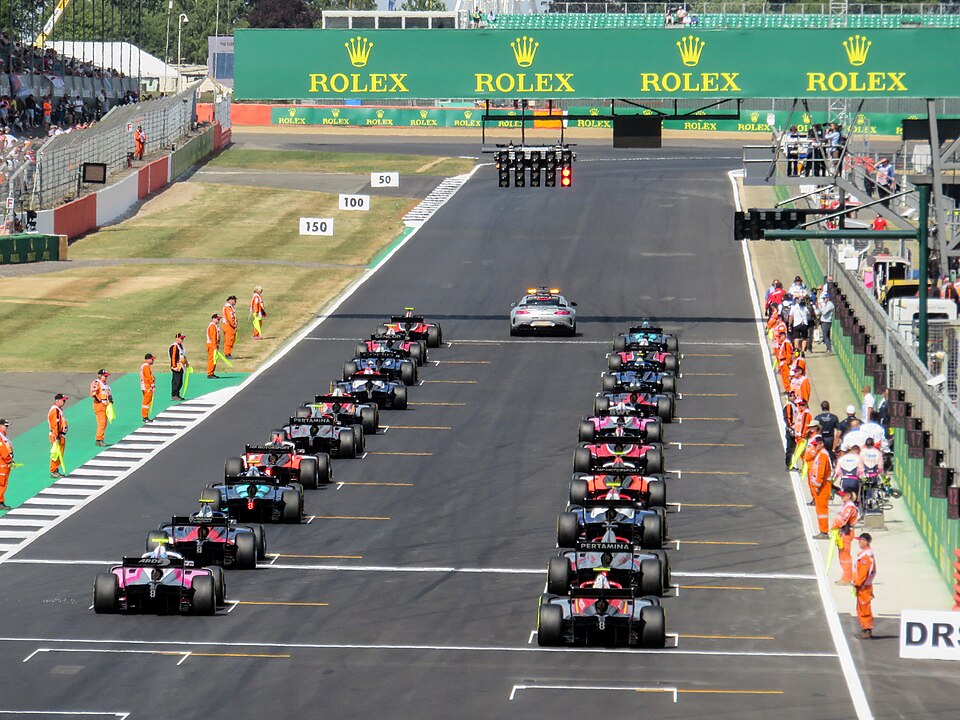
There are grands prix, and then there's Silverstone. If you've been to a race weekend in Northamptonshire, you understand immediately why F1 fans treat the British Grand Prix as a pilgrimage rather than just a ticket on a calendar. The smell of tyre rubber hanging in the air, the cathedral-like roar of engines through Maggotts and Becketts, the crowd noise that seems to climb a full octave every time a British driver passes the grandstands — there is genuinely nothing else like it.
The 2026 edition promises to be something different again. With five British drivers on the grid at the same time — and Silverstone as their home track — the atmosphere is going to be electric in a way that even long-time regulars won't have experienced before. This is the guide that covers everything: schedule, circuit, logistics, best spots, entertainment, and why I think this particular race weekend deserves to be on your bucket list right now.
Full Sprint Weekend Schedule: July 2–5, 2026
The 2026 British Grand Prix uses the sprint format, which compresses the traditional weekend structure significantly. For fans attending, this means more competitive action across all four days — and no half-empty Thursday. Here's exactly what's happening and when:
| Day | Session | Time (BST) |
|---|---|---|
| Thursday, July 3 | Practice Session 1 | TBC |
| Thursday, July 3 | Sprint Qualifying | TBC |
| Saturday, July 4 | Sprint Race | TBC |
| Saturday, July 4 | GP Qualifying | 16:00 BST |
| Sunday, July 5 | British Grand Prix (Race) | 15:00 BST |
* Thursday is the first on-track day. Friday July 4 is reserved for team/sponsor activities. Times subject to official FIA confirmation.
How the 2026 Format Compares to Previous Years
Silverstone has evolved its weekend format considerably over the last few years. The shift to sprint format changes what fans actually experience on each day, and it's worth understanding what's new in 2026 versus what you might remember from 2024 or 2025.
| Feature | Silverstone 2024 | Silverstone 2025 | Silverstone 2026 |
|---|---|---|---|
| Format | Standard | Standard | Sprint |
| Practice sessions | 3 (FP1/FP2/FP3) | 3 (FP1/FP2/FP3) | 1 (FP1 only) |
| Sprint Race | No | No | Yes (Sat) |
| Qualifying sessions | 1 (Sat) | 1 (Sat) | 2 (Sprint Qual Thu + GP Qual Sat) |
| Competitive track days | 3 | 3 | 3 (Thu/Sat/Sun) |
| British drivers on grid | 3 | 3–4 | 5 |
The sprint format means Thursday now carries genuine stakes for the first time — Sprint Qualifying sets the grid for Saturday's sprint race, which in turn carries its own championship points. For casual fans who thought Thursday was a throwaway, think again. In 2026, every session from the first one matters.
Five British Drivers: Why This Changes Everything
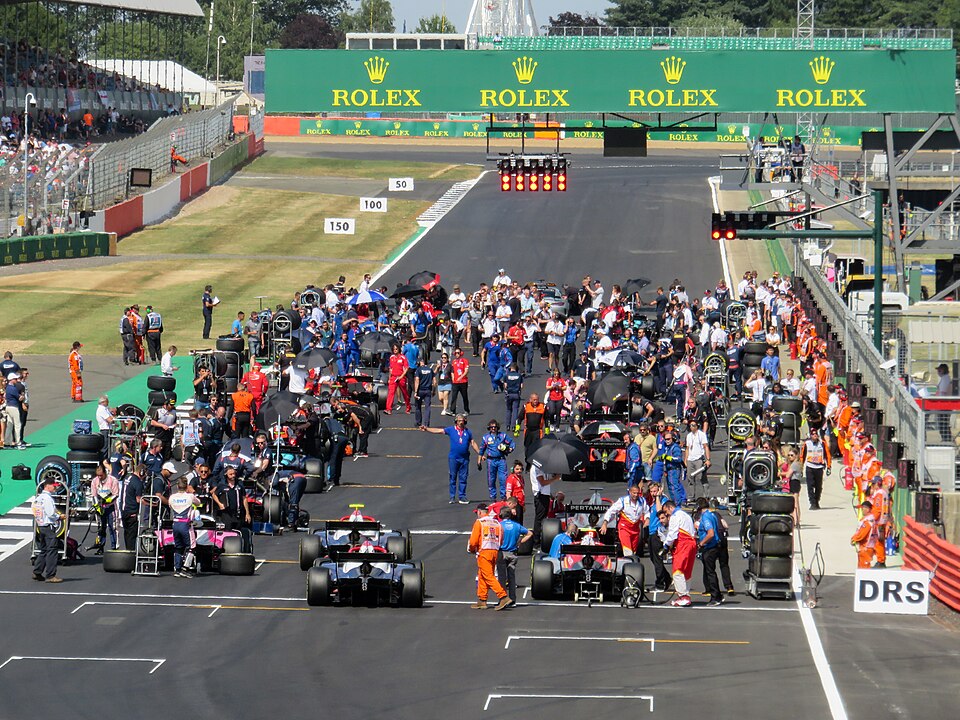
Let me be direct about this: five British drivers on the grid at the same time, at Silverstone, is genuinely unprecedented in the modern era. It's not just a nice talking point — it fundamentally changes the crowd dynamics at a circuit that already produces the loudest, most passionate F1 atmosphere on the calendar.
Think about what happens every time one of these drivers goes through Copse or Stowe. Now multiply that by five and stack them across five different teams with five different sets of fans. The grandstands are going to be a patchwork of McLaren papaya, Mercedes silver, Ferrari red, Haas white-black, and plenty of Union Jacks cutting across all of them. This is the kind of home race that British motorsport has been building toward for years.
Norris arrives as a genuine championship contender — McLaren's trajectory gives him a legitimate shot at being in the title fight when the cars arrive in Northamptonshire. Russell carries the weight of a Mercedes in transition, pushing hard to prove he belongs at the very front. Hamilton in Ferrari red will draw a reaction from the Silverstone crowd that will be unlike anything since his championship-winning years. And Bearman plus Lindblad represent the next generation, racing on the circuit where many of them first watched grands prix as children.
No matter which grandstand you're sitting in, at least one of those five names will give you something to cheer about on Sunday afternoon.
The Silverstone Circuit: What Makes It Special
Silverstone is not the fastest circuit on the calendar in terms of raw lap times, but it's consistently rated by drivers as one of the most demanding and rewarding layouts in the entire world. The combination of high-speed corners, technical sectors, and the sheer commitment required to get a competitive lap together makes it uniquely challenging.
- Length: 5.891 km per lap
- Corners: 18 (mix of high-speed and medium-speed)
- Full throttle: Approximately 80% of each lap
- Circuit record: Among the quickest average speeds in F1
The two sections that define Silverstone are Maggotts-Becketts-Chapel and Copse Corner. Maggotts-Becketts is a sequence of near-continuous direction changes taken at extraordinary speeds — in qualifying, drivers carry over 270 km/h through sections that look almost impossible from the grandstand. The lateral G-forces are brutal. Copse Corner, immediately after the pit straight, is taken flat in modern F1 cars: a blind commitment at speeds that should rationally require braking. It doesn't. This is what makes Silverstone elite.
Viewing tip: The Becketts grandstand gives you a view of possibly the most spectacular sequence of corners in world motorsport. If you've never watched F1 from there — the sense of speed through Maggotts is almost overwhelming in person. It's worth the longer walk from the main entrance.
Getting to Silverstone: Practical Information
Silverstone's location in rural Northamptonshire means planning your travel in advance is essential. The circuit draws 150,000+ fans across race weekend, and the surrounding road network requires careful management. Here's what you need to know:
By Car
Exit the M1 at Junction 15A (from the south) or Junction 16 (from the north) and follow the Silverstone event signs. The circuit has extensive on-site parking across multiple zones — purchase in advance online, prices increase significantly closer to the event. Build in extra time on qualifying and race days; queues on the A43 can extend journey times by 60–90 minutes in either direction.
By Train and Shuttle
The most stress-free option for many fans. London Euston to Milton Keynes Central takes approximately 35 minutes; Euston to Northampton is around 55 minutes. Both stations operate dedicated shuttle bus services to the circuit on all four event days. Services ramp up significantly in volume around session start and finish times. Pre-booking shuttle tickets is strongly recommended — queues for walk-up tickets can be substantial on race day.
Campsite and Glamping
Silverstone operates extensive camping across the infield and surrounding land. If you're doing the full four-day experience — particularly with the sprint format adding value to Thursday — on-site camping eliminates the daily travel headache entirely and puts you inside the circuit atmosphere from Thursday morning onwards.
Entertainment: M&S Mainstage Lineup
In 2026, Silverstone has once again assembled an impressive Mainstage lineup that turns the grand prix into a full festival experience. Acts perform after each day's on-track sessions, giving fans a reason to stay well into the evening rather than rushing for the exit.
| Day | Artist | Notes |
|---|---|---|
| Thursday, July 3 | David Guetta | Electronic/dance headliner |
| Friday, July 4 | Richard Ashcroft | Britpop icon |
| Saturday, July 4 | Chase & Status | Drum & bass, post-Sprint Race |
| Sunday, July 5 | Rag'n'Bone Man | Post-Race Sunday headliner |
Richard Ashcroft is a particularly sharp booking for the British GP — his association with classic British rock gives Friday an anthemic quality that suits the occasion well. Chase & Status after the sprint race on Saturday is going to hit differently given the buzz that follows a 17-lap maximum-attack sprint. And Rag'n'Bone Man's powerful vocal style is exactly what you want echoing across the circuit as the sun goes down after race day.
Best Grandstands and Viewing Spots
Silverstone has invested heavily in grandstand infrastructure over the last decade. Each area of the circuit offers something different, and the right choice depends entirely on what kind of viewing experience you're prioritising.
- Woodcote: Pit straight and start/finish line. Best for the race start, safety car periods, and seeing pit stop strategy unfold live. Great screens for the whole circuit.
- Becketts: The high-speed complex. The most dramatic sight in all of Silverstone — watching F1 cars through the sweeps at racing speed is genuinely jaw-dropping. Bring earplugs and expect your perspective on what's possible at speed to shift permanently.
- Village/Loop: Excellent for overtaking. The chicane complex creates braking opportunities and close racing moments. Popular with fans who want to see wheel-to-wheel action rather than pure speed.
- Stowe: Classic DRS zone braking point. Heavy braking into a genuine overtaking corner makes this a great seat for late race action when cars are on different strategies.
- Club: The final complex before the start/finish straight. Good value, good views of the run to the line.
My personal recommendation for first-timers: Woodcote for race day (you see the start and the celebrations), Becketts for qualifying (the sector is at its most spectacular when drivers push for a single fast lap). If budget allows, do both across the weekend.
Why the 2026 British Grand Prix Is Different
I've covered grands prix from multiple circuits, and I want to be honest about what makes this one worth singling out rather than treating it as just another round on the calendar.
The five British drivers situation is genuinely once-in-a-generation. We haven't had this many British drivers on a single F1 grid at the same time in the modern era, let alone racing at Silverstone. The crowd will be split — but not in a hostile way. It'll be split in the best possible way: five sets of fans, five different narratives, five different moments to cheer, all compressed into four days at a circuit that's been the spiritual home of British motorsport for over 70 years.
Add the sprint format giving you meaningful action from Thursday onwards, a Mainstage lineup that covers electronic, Britpop, drum & bass, and soul in four consecutive evenings, and the championship stakes that will still be live in July — and you have a race weekend that deserves the premium treatment it'll inevitably receive from the broadcasters and the sport's own promotional machine.
This is the one to be at in 2026. Don't talk yourself out of it.
Frequently Asked Questions
When is the F1 British Grand Prix 2026?
The 2026 F1 British Grand Prix at Silverstone runs July 2–5, 2026. The main race is Sunday July 5 at 15:00 BST. It's a sprint format weekend: Sprint Qualifying and Practice on Thursday July 3, Sprint Race and GP Qualifying on Saturday July 4 (qualifying at 16:00 BST).
Is the 2026 British Grand Prix a sprint weekend?
Yes. The 2026 British GP is a sprint format round. There is only one practice session (Thursday), Sprint Qualifying (Thursday), the Sprint Race (Saturday), GP Qualifying (Saturday at 16:00 BST), and the main race (Sunday at 15:00 BST). No traditional FP2 or FP3.
Which British drivers are racing at Silverstone in 2026?
Five British drivers are on the 2026 F1 grid: Lando Norris (McLaren), George Russell (Mercedes), Lewis Hamilton (Ferrari), Oliver Bearman (Haas), and Arvid Lindblad. This is the largest contingent of British drivers at a home race in the modern era.
How do I get to Silverstone Circuit?
By car, exit the M1 at Junction 15A and follow event signs. By train, take London Euston to Milton Keynes Central (35 mins) or Northampton (55 mins), then a shuttle bus to the circuit. Pre-book shuttle tickets — walk-up queues are long on race day.
What is the Silverstone Circuit layout?
Silverstone is 5.891 km long with 18 corners, with cars at full throttle for approximately 80% of each lap. The circuit's defining sections are the high-speed Maggotts-Becketts complex and flat-out Copse Corner. It's one of the most technically demanding and fastest circuits on the F1 calendar.
Who is performing at Silverstone 2026?
The M&S Mainstage lineup: David Guetta (Thursday July 3), Richard Ashcroft (Friday July 4), Chase & Status (Saturday July 4), and Rag'n'Bone Man (Sunday July 5). Concerts follow each day's on-track sessions.
What are the best grandstands at Silverstone?
Woodcote is best for the start/finish line and pit straight. Becketts offers the most spectacular view of high-speed F1 action anywhere in motorsport. Village/Loop gives the best wheel-to-wheel overtaking views. Stowe is ideal for DRS braking zone action. For first-timers, Woodcote on race day and Becketts for qualifying is the recommended combination.
.jpg)